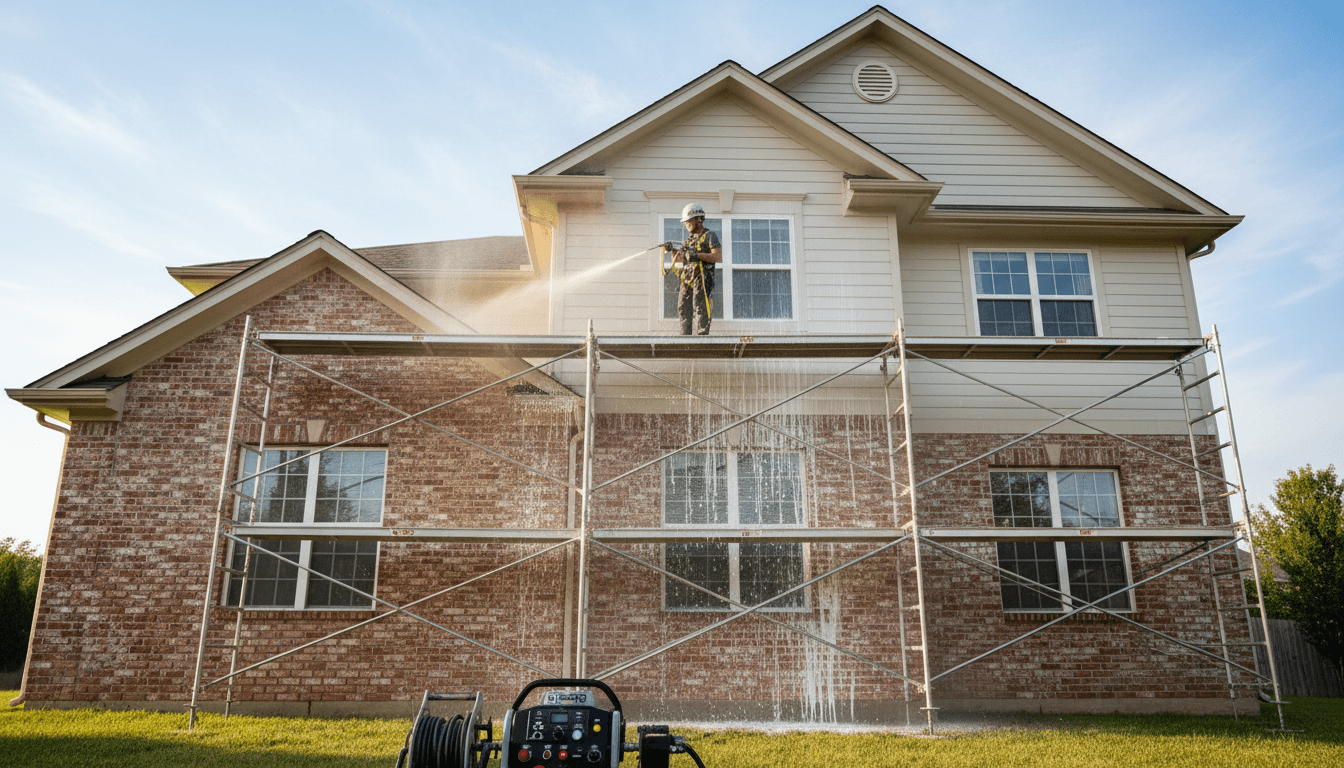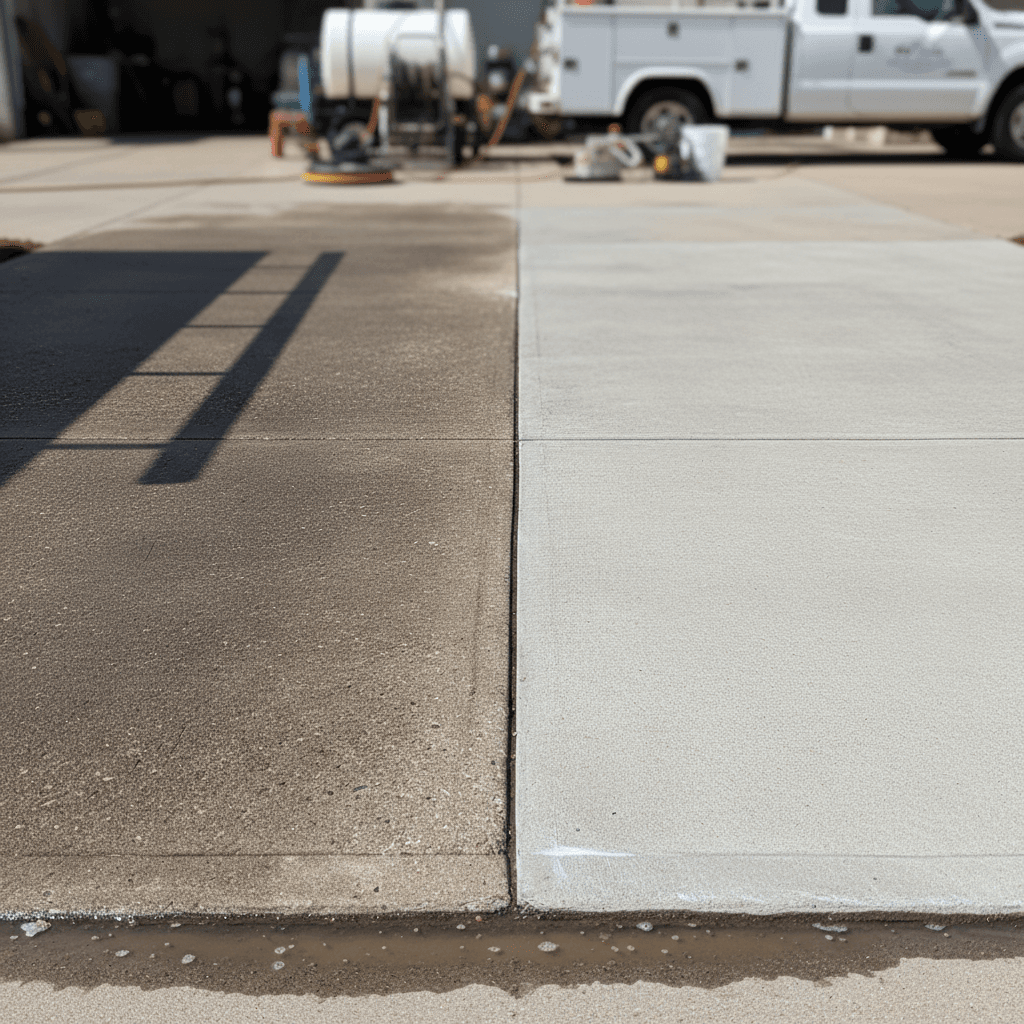
Homeowners should typically clean their concrete surfaces once every twelve months to maintain curb appeal and prevent structural damage. When considering how often to pressure wash driveway surfaces, factors like heavy shade, high traffic, and humid climates may necessitate more frequent maintenance every eight to ten months. This regular schedule helps eliminate harmful organic growth before it causes permanent staining.
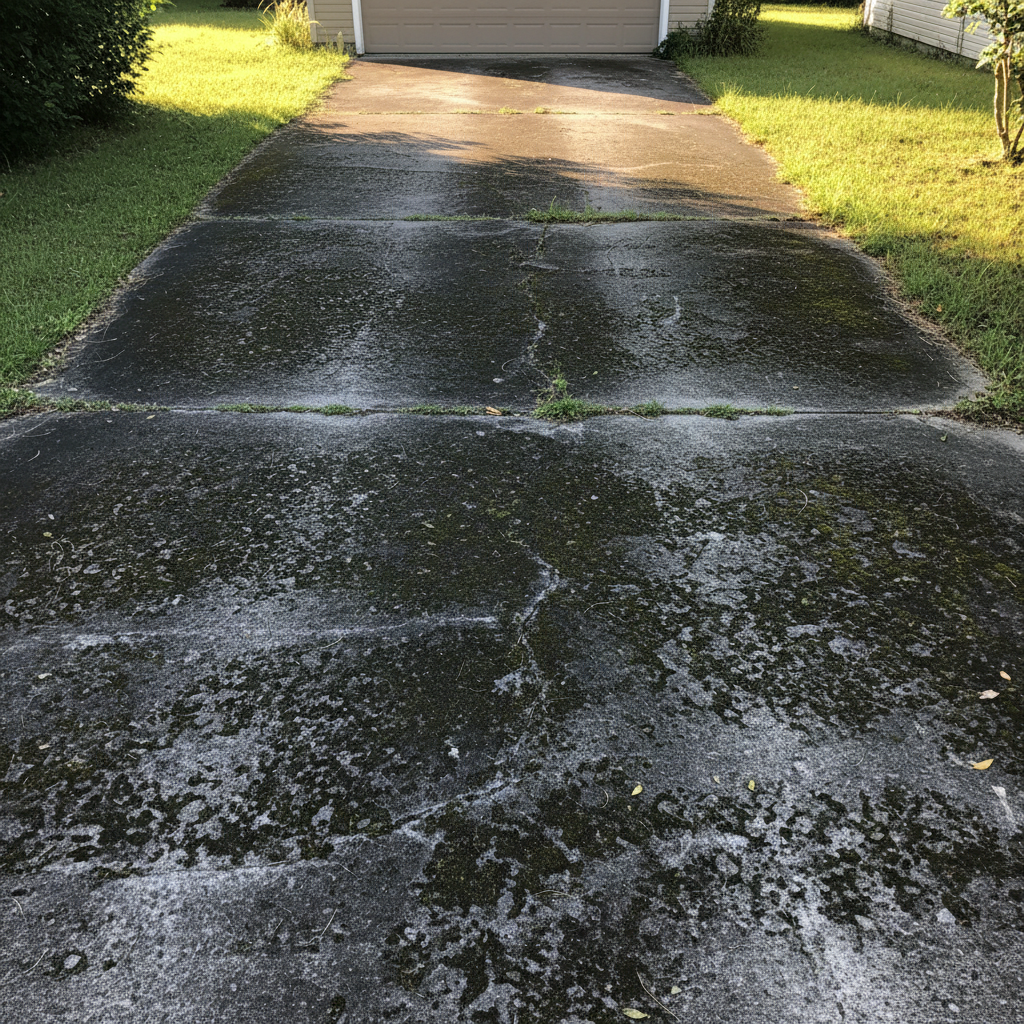
If your driveway looks more like a petri dish than a welcoming entrance, you are not imagining things. Columbus homeowners deal with a unique combination of humidity, red clay runoff, pine pollen, and summer heat that turns a clean driveway into a grimy mess faster than most people realize. Ignoring it is not just an eyesore; it shortens the life of your concrete or asphalt and chips away at your home's curb appeal and value. In this guide, you will learn exactly how often Columbus driveways need to be pressure washed based on surface type and conditions, how to spot the warning signs that mean it cannot wait, and what professional cleaning costs so you can plan ahead and protect your investment.
TL;DR: How Often Columbus Driveways Need Pressure Washing
Most Columbus and Phenix City driveways need professional pressure washing 1 to 2 times per year. Once annually is the bare minimum, but twice yearly is the smarter call for driveways with heavy tree coverage, persistent shade, or high daily traffic. Georgia's humid subtropical climate pushes mold, algae, and organic buildup to grow faster than national cleaning guides account for, so the generic "once a year" advice you'll find online undershoots what local driveways actually need. If you want a straight answer on how often to pressure wash your driveway here in the Chattahoochee Valley, it's more often than most people think.
Why Columbus Georgia's Climate Makes Driveway Cleaning More Urgent

That "once a year" advice you see repeated across national home improvement sites was not written with Columbus in mind. Generic recommendations don't account for what the Chattahoochee Valley actually throws at a concrete surface across twelve months.
Columbus and Phenix City sit in a humid subtropical climate zone, which means conditions are near-perfect for mold, mildew, algae, and black-green organic buildup to colonize concrete year-round. The numbers tell the story: Columbus averages over 50 inches of rainfall annually, summer humidity regularly climbs above 80%, and warm temperatures hold from March through October. That's eight solid months where organic growth doesn't slow down.
Spring adds another layer of urgency. From March into April, pine pollen blankets every outdoor surface in a thick, sticky yellow film. On driveways, that pollen doesn't just sit there; it traps moisture against the concrete and gives mold and algae a food source to establish on. A driveway coated in spring pollen and then hit with April rain showers is essentially a growth medium.
Location within the metro matters too. Homeowners near Flat Rock Park, Lakebottom Park, or the wooded subdivisions in north Columbus deal with heavier tree canopy, more organic debris, and faster biological buildup than properties in open, sun-exposed neighborhoods. If large oaks or pines overhang your driveway, a once-per-year cleaning schedule is almost certainly not keeping up with what's actually growing on your concrete.
The Right Pressure Washing Frequency by Driveway Type and Situation
The right answer to how often to pressure wash your driveway depends less on a calendar and more on what your specific driveway deals with every day. Here is how frequency breaks down by situation.
Standard concrete driveway with moderate sun exposure: Once per year is appropriate, and late spring is the best window. After pollen season winds down in May, you get warm temperatures, reasonable humidity, and a surface that's had months of buildup to address.
Shaded driveway with tree canopy overhead: Twice per year, spring and fall. Shade prevents concrete from drying between rain events, keeping moisture against the surface longer and giving algae and mold exactly the conditions they need to spread. This is the single most common situation where once-a-year cleaning falls short.
High-traffic driveways with multiple vehicles, trucks, or boats: Twice yearly. Fluid drips and tire residue accumulate faster than rainfall can dilute them, and that organic and petroleum mix bonds to concrete over time.
Driveways bordered by red Georgia clay: Plan for periodic spot cleaning between full washes. Clay tracks onto concrete quickly and stains fast, especially after rain softens the soil along the driveway edges.
Newly sealed or recently installed concrete: Follow the sealer manufacturer's guidelines rather than a generic schedule. Most sealers recommend waiting 12 to 18 months before the next full pressure wash to avoid stripping the protective coat prematurely.
If large oaks or pines hang over your driveway, you almost certainly fall into the twice-yearly category regardless of traffic or clay exposure.
Signs Your Driveway Needs Pressure Washing Now, Not Later
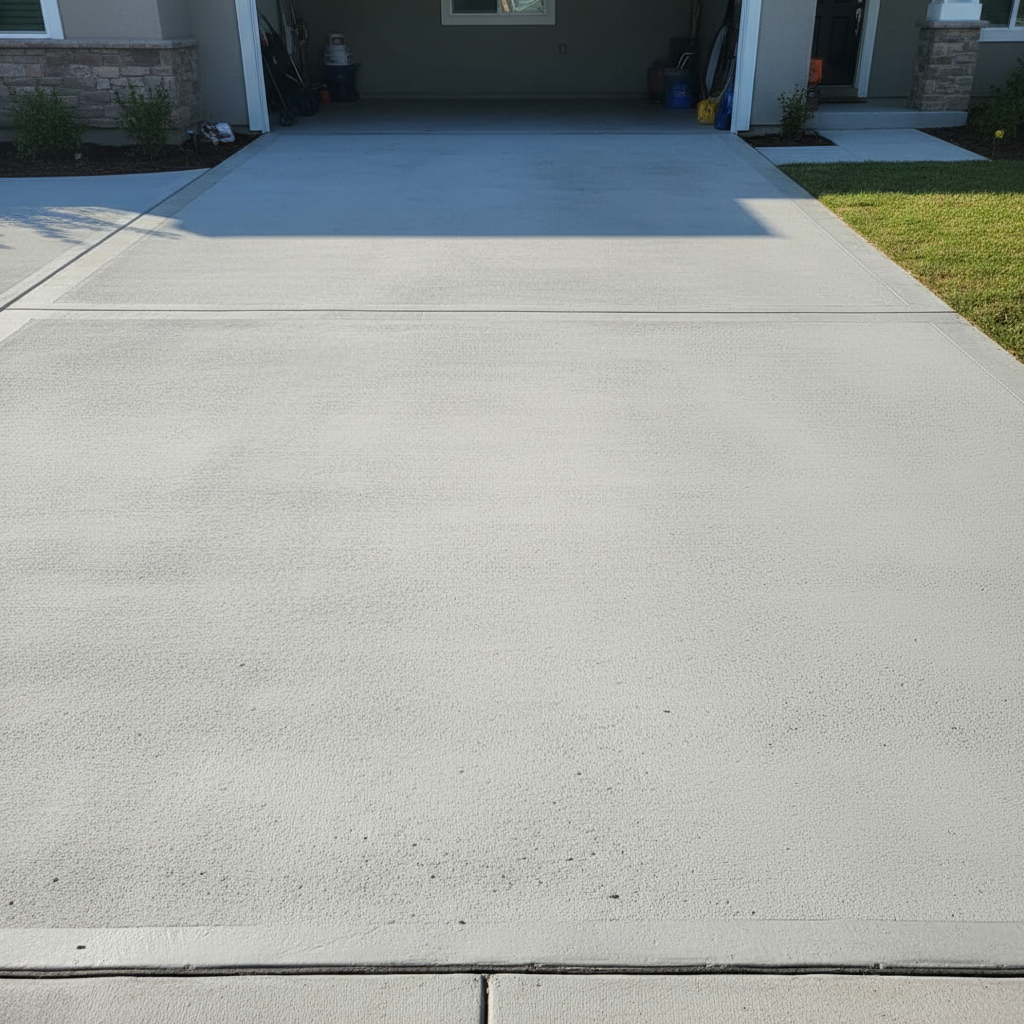
Knowing how often to pressure wash your driveway matters, but sometimes the concrete itself tells you it's time before the calendar does. A few specific conditions mean cleaning should move up on the priority list.
Green or black patches spreading across the surface. This is not surface dirt. Algae and mold form colonies that actively spread, and once established, they go deeper into the concrete's pores the longer they sit.
A slippery surface when wet. Organic growth creates a film that turns concrete into a slip hazard, especially on slopes or near the garage entrance. This is a safety issue, not just an aesthetic one.
Dark tire tracks that don't rinse off after rain. Petroleum residue from fluid drips and tire rubber bonds to concrete quickly, and rain alone won't break it down.
Orange or red staining along the edges or entry points. Georgia red clay tracks onto driveways fast, especially after rain softens the soil. Left alone, it sets into the concrete surface.
A dull gray-brown haze across the whole surface. When the original concrete color is barely recognizable, years of layered buildup have accumulated.
After any major storm or flooding event. Standing water, debris, and sediment deposit organic material across the surface that accelerates biological growth.
Waiting until the situation looks severe gives mold and algae time to work into the concrete's pores, making thorough cleaning harder and raising the risk of staining that no amount of pressure washing fully reverses.
Can You Pressure Wash a Driveway Too Much? The Truth About Over-Cleaning
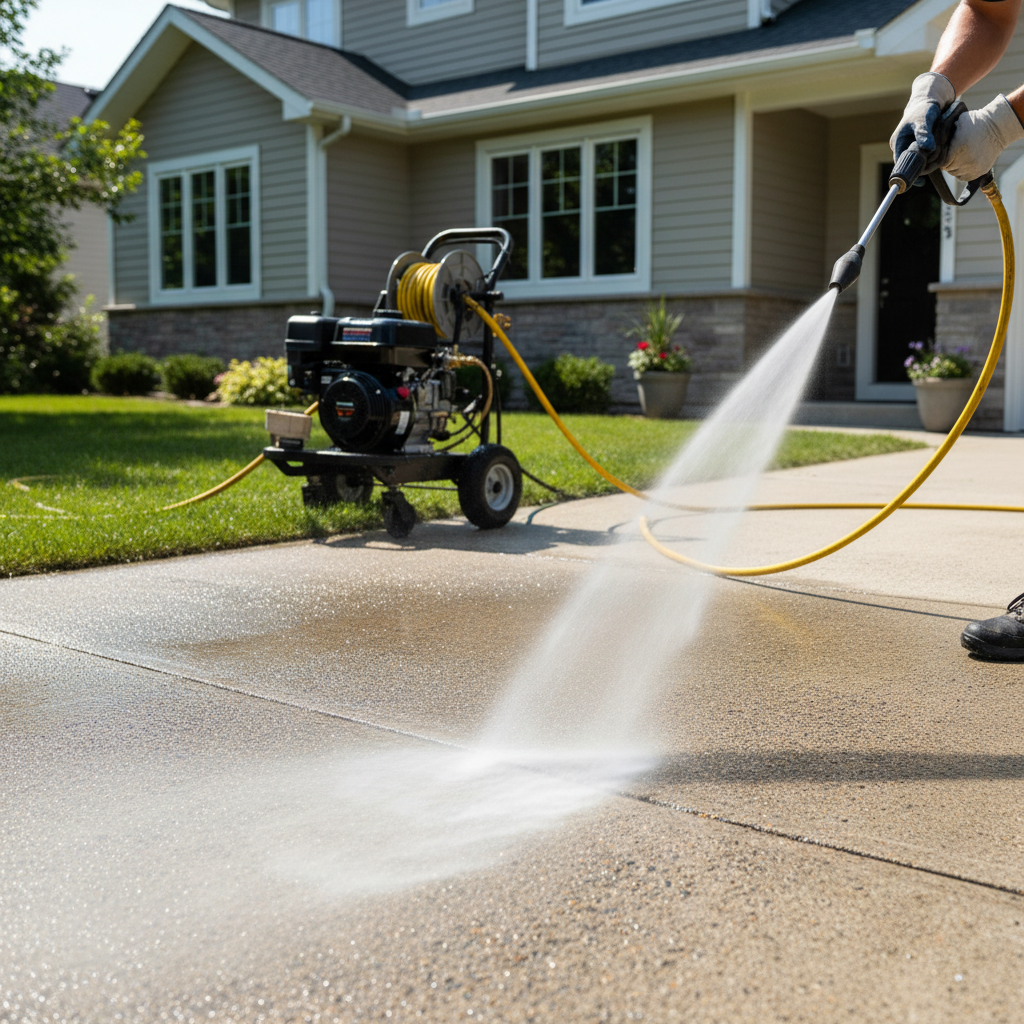
Once you recognize the signs of a dirty driveway, it is natural to wonder whether cleaning more often could cause problems. The short answer is yes, but with an important clarification: the risk is almost never frequency. The risk is method.
Standard residential concrete can be damaged by PSI settings above 3000, a zero-degree nozzle held too close to the surface, or repeated aggressive cleaning that strips the sealer and begins to pit or etch the concrete. These are technique problems, not scheduling problems. A homeowner cleaning once or twice per year with properly calibrated equipment is not going to wear out a driveway.
The more realistic danger comes from DIY pressure washing with rented equipment. Consumer-grade rentals often deliver inconsistent pressure, and without a rotating surface cleaner, operators tend to hold a single nozzle at varying distances, which leaves streaks, missed sections, and the occasional surface gouge. That uneven result is both an aesthetic and a long-term durability problem.
At Country Boys, we use surface cleaners and calibrated PSI settings matched to the specific surface, which cleans thoroughly without the risk of etching.
One additional note: asphalt driveways require meaningfully lower PSI than concrete and should never be treated with the same settings. If your driveway is asphalt, make sure any contractor you hire knows the difference before they start.
The Best Time of Year to Pressure Wash Your Driveway in Columbus
Timing a driveway cleaning correctly extends how long the results last and makes the cleaning itself more effective. In Columbus and Phenix City, two windows stand out.
Late spring, specifically April into May, is the primary window. By that point, the worst of pine pollen season has peaked and begun to clear, temperatures are climbing into the 70s and 80s for consistent drying, and the heavy afternoon storms and sustained humidity of deep summer have not yet settled in. Cleaning in this window removes the sticky pollen film before it hardens further, and the concrete dries quickly without the cleaning solution sitting too long on the surface.
Fall, October through November, is the ideal second window for homeowners on a twice-yearly schedule. Summer in Columbus produces significant biological growth, and a fall cleaning removes that accumulated mold and algae before cooler temperatures arrive. October specifically gets asked about often, and the answer is straightforward: October is one of the better months to pressure wash in this climate. Mild temperatures, lower humidity than summer, and reliable drying conditions make it a practical choice.
The window to avoid is peak summer, July and August. High surface temperatures cause concrete to dry too fast, which can leave cleaning solution residue behind rather than rinsing cleanly.
Country Boys serves Columbus and Phenix City year-round and is happy to help you nail down the right timing when you book.
Driveway Pressure Washing Cost in Columbus: What to Expect
Cost is a reasonable thing to sort out before scheduling a cleaning, so here is a realistic range for Columbus and Phenix City homeowners. Most residential concrete driveways run somewhere between $80 and $180, with the final number shaped by the driveway's square footage, how severe the staining is, and whether you add connecting surfaces like a walkway or patio.
Bundling is worth considering. Adding a patio or pool deck to the same visit costs less per square foot than scheduling each surface separately, and the results are consistent since everything gets cleaned in one pass with the same equipment setup.
A few things can push a job toward the higher end of that range: heavy clay staining worked into the concrete, significant mold or algae coverage, or a long driveway with multiple vehicles parked on it regularly. Straightforward maintenance cleanings on moderately sized driveways tend to land in the lower half.
Country Boys provides honest, upfront pricing before any work starts. To get an accurate number for your specific driveway, get a free quote from Country Boys Pressure Washing.
Protect Your Driveway Between Cleanings: Simple Maintenance Tips
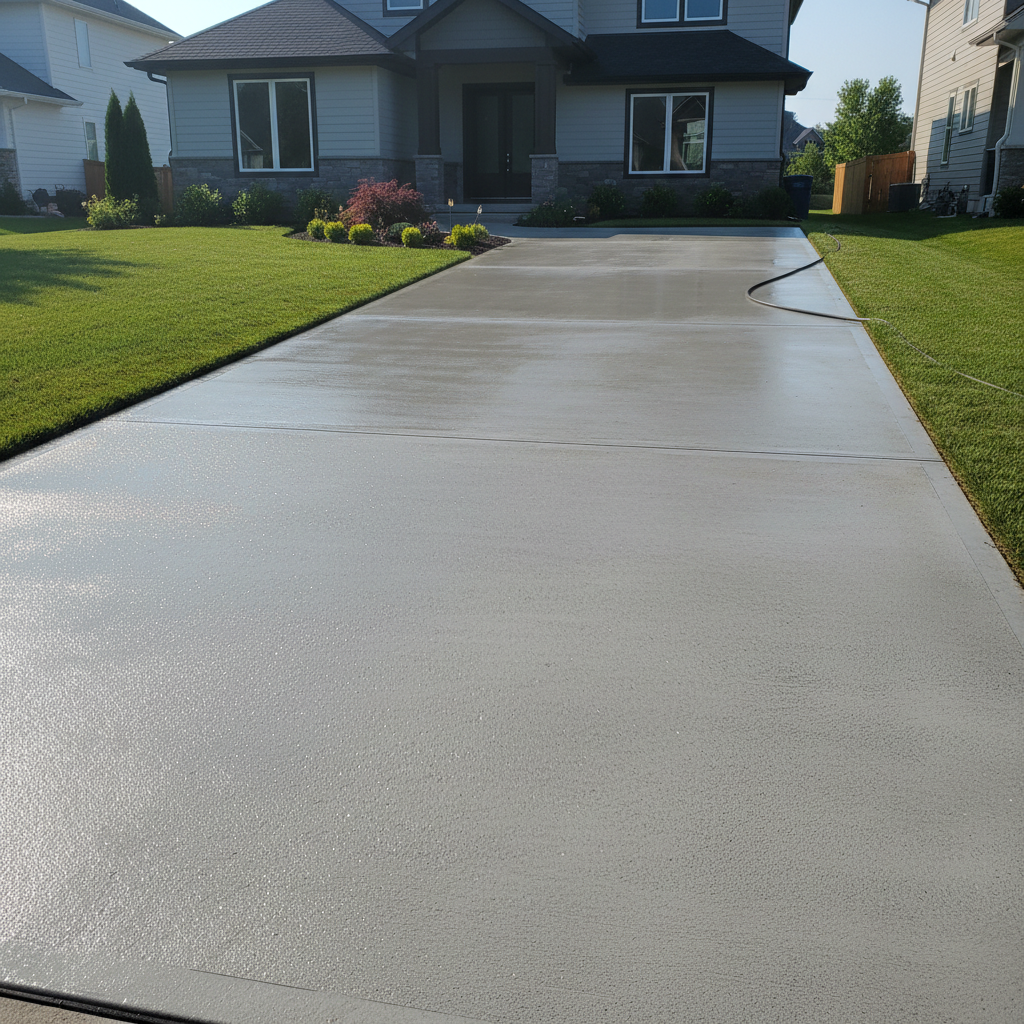
A professional cleaning resets your driveway, but what you do between visits determines how long those results hold. A few straightforward habits make a real difference.
Rinse after heavy pollen days. During March and April, a quick pass with a garden hose after a major pollen event keeps that sticky yellow film from hardening against the concrete and giving mold a foothold. It takes five minutes and meaningfully slows biological growth.
Deal with fluid leaks immediately. Engine oil and transmission fluid bond to concrete quickly. Applying a household degreaser while the spot is fresh is far easier than trying to lift a set stain during a full cleaning later.
Trim overhanging branches when practical. Reducing canopy coverage over your driveway improves sun exposure and cuts down on leaf and debris accumulation, both of which trap moisture and feed organic growth.
Apply a concrete sealer after your next professional cleaning. Sealer slows stain absorption and makes routine rinsing more effective between visits. Ask about timing when you book.
Skip salt-based ice melt. Columbus freezes rarely, but when it does, salt-based products damage concrete surfaces and accelerate cracking over time. Sand or a calcium chloride alternative is a safer call.
These habits compound over time. The cleaner you keep the surface between visits, the more a professional cleaning functions as maintenance rather than restoration. To see what a fresh start looks like, see real before and after results.
Maintaining a clean driveway is about more than just curb appeal; it is a vital part of preserving your property value and preventing long term damage from Columbus weather. While regular rinsing helps, deep cleaning once or twice a year keeps surfaces safe and attractive. If you want expert help ensuring your exterior looks its best, our team is here to assist. Whether you need a simple driveway refresh or more specialized Community Cleaning services, we are ready to provide a thorough wash that saves you time and effort.