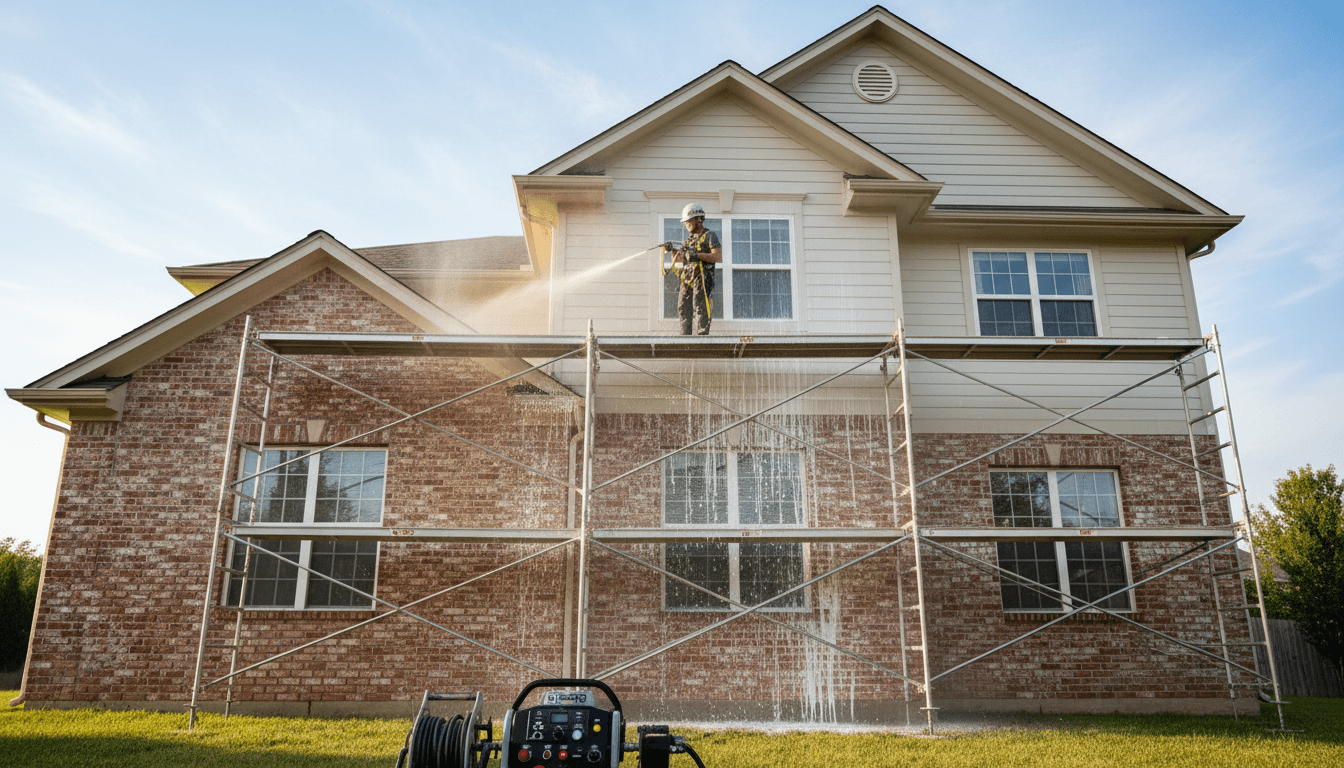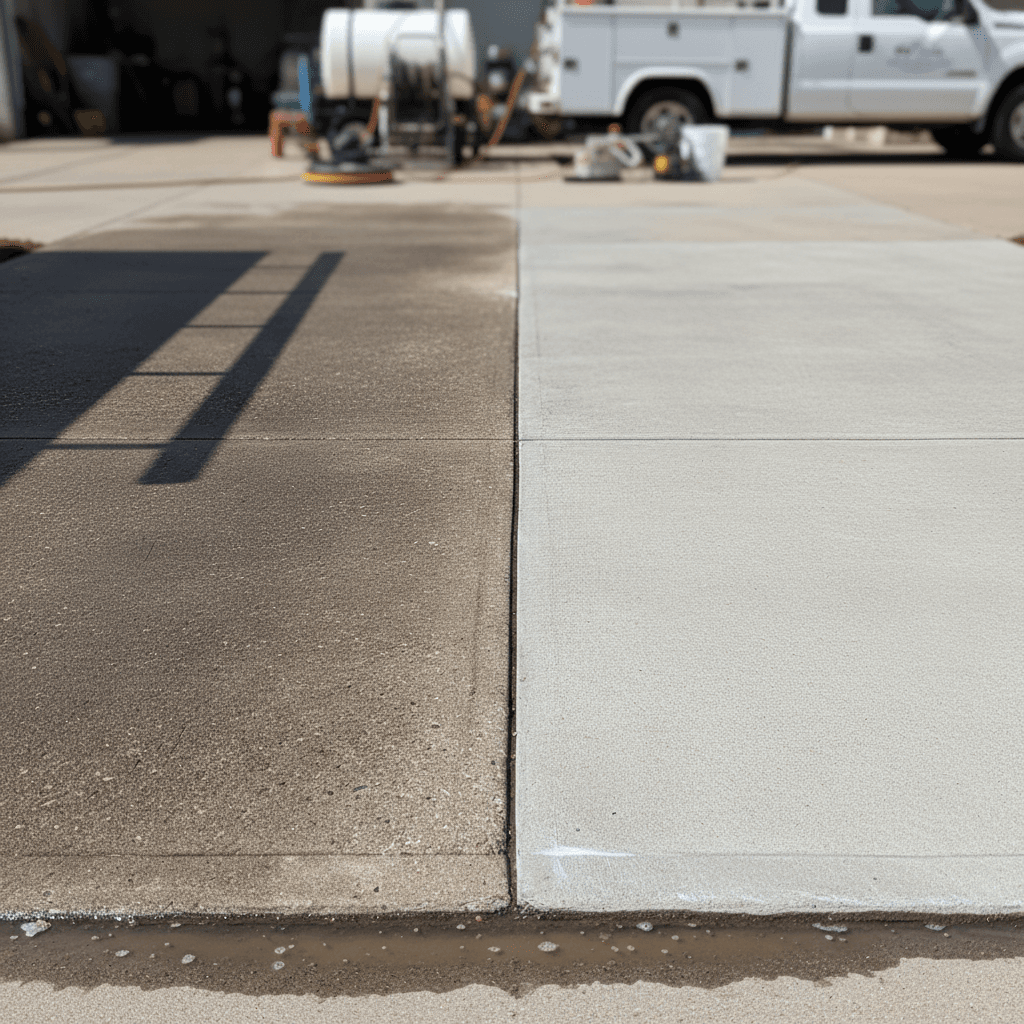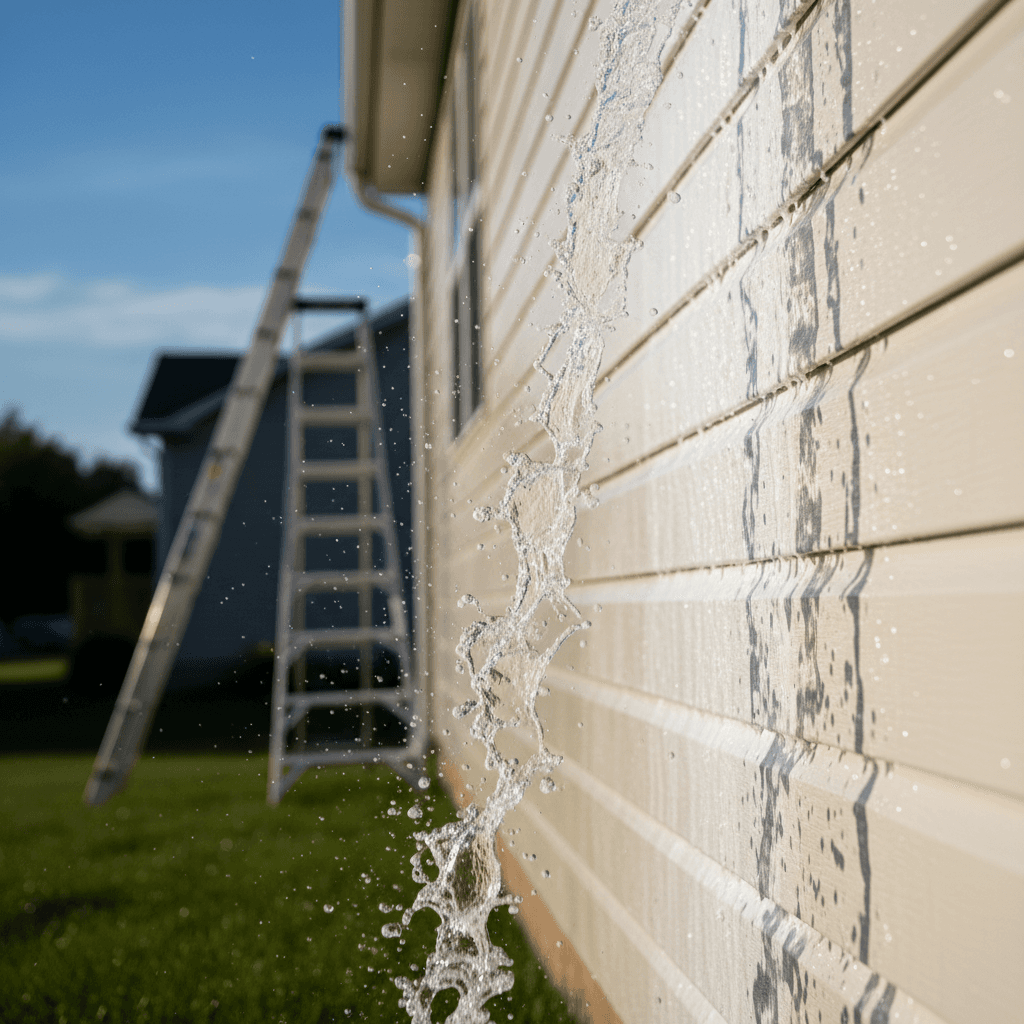
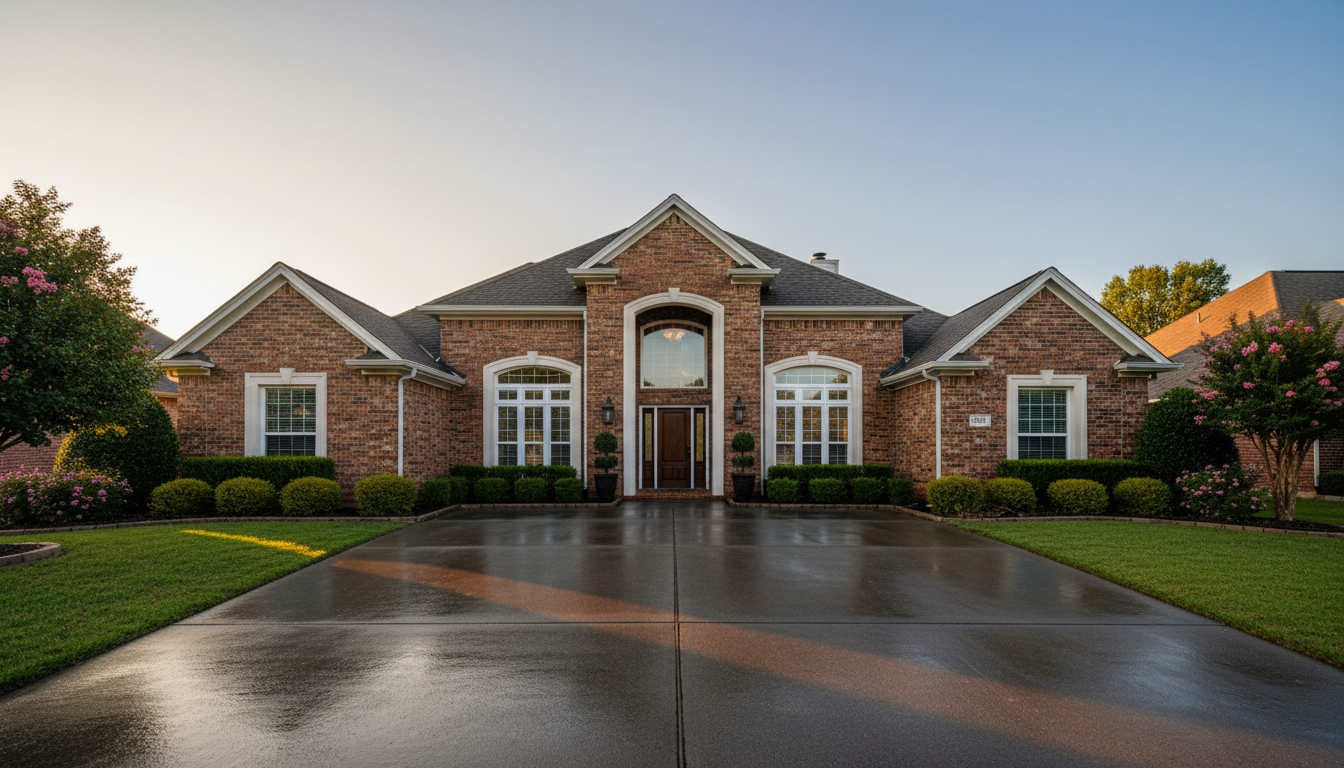
Pressure washing brick safely is possible by using low pressure settings and specialized detergents to prevent erosion of the mortar or the bricks themselves. Homeowners should always saturate the surface with water before cleaning and avoid high-pressure streams on historic masonry; otherwise, the structural integrity of the wall could be compromised.
You noticed the black streaks and green algae creeping across your brick, grabbed a pressure washer, and now you're second-guessing whether you're about to make a very expensive mistake. That hesitation is smart. Brick looks tough, but the mortar holding it together and the surface texture underneath can be damaged quickly with the wrong approach, and Columbus homeowners deal with specific conditions that make this even more important to get right. In this guide, you will learn exactly how to determine if your brick can handle pressure washing, what PSI is actually safe to use, when soft washing is the better call, and how to handle special cases like painted or white brick without causing permanent damage.
The Short Answer: It Depends on Your Brick
Pressure washing brick can be completely safe, or it can cause serious damage. The difference comes down to three things: the age and condition of your brick, the PSI being used, and the technique applied.
Columbus and Phenix City homes cover a wide range of construction eras. A newer brick-veneer home in Midland or Fortson behaves very differently under a pressure washer than a 1940s brick bungalow in midtown Columbus. The older the brick, the more porous and fragile it tends to be, and the more precisely pressure washing brick safely requires the right approach.
Mistakes here are not cheap. Eroded mortar joints, spalling brick faces, and water forced into wall cavities are all real outcomes of the wrong method applied to the wrong surface. The good news is that with a proper pre-inspection and the right equipment settings, most brick homes can be cleaned effectively without any damage.
TL;DR
Brick can be pressure washed safely, but only at 500-1200 PSI using the correct nozzle angle and technique; never exceed 1500 PSI on any residential brick.
Soft washing is the safer choice for older brick, painted brick, or any home showing mortar deterioration, using low pressure and cleaning solutions to remove mold and algae without mechanical force.
Before any washing, inspect mortar joints for crumbling or soft spots; skipping this step is where most DIY cleanings go wrong.
For homes built before 1980 or with visible mortar damage, hire a professional. The cost of repointing eroded mortar or replacing spalled brick far outweighs the cost of doing it right the first time.
Why Brick Is More Vulnerable Than It Looks
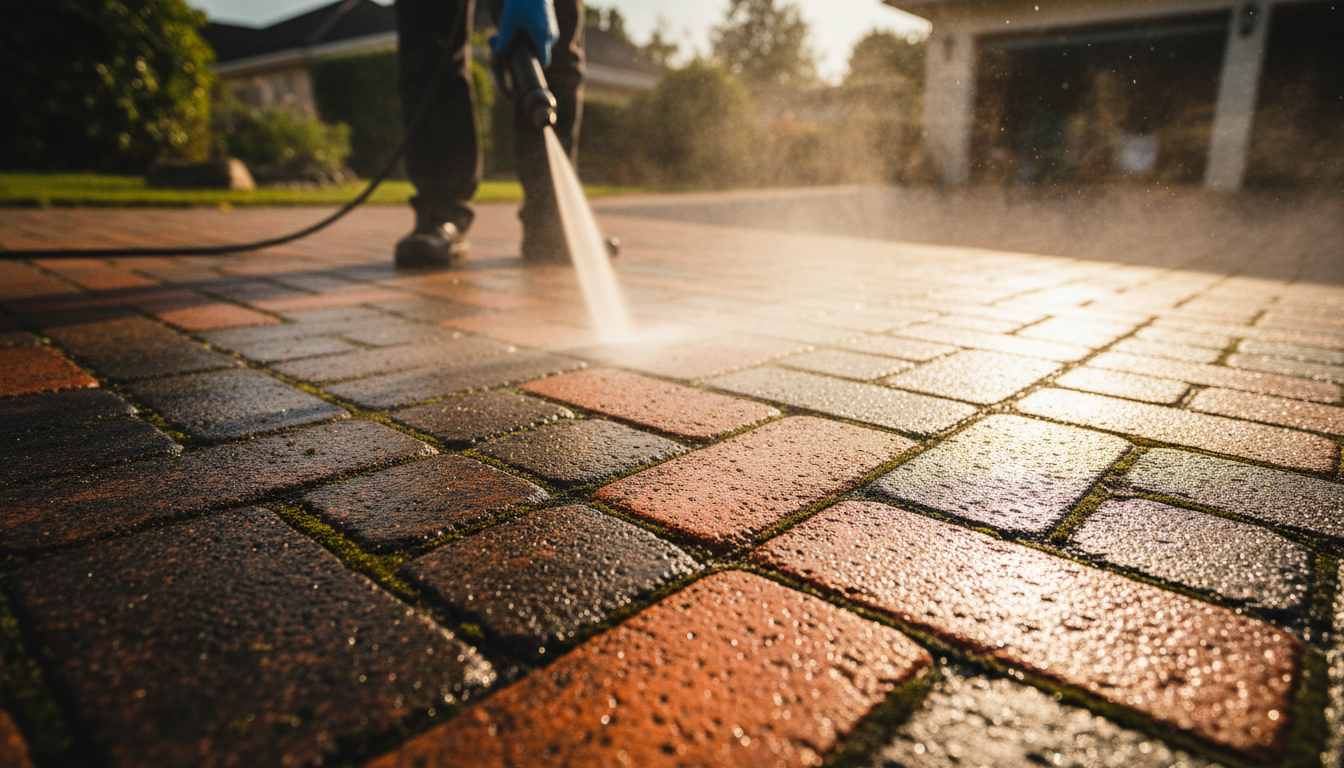
So can pressure washing damage bricks? Yes, and more easily than most homeowners expect. Brick looks tough, and it is, but the system holding it together is not nearly as resilient as the brick faces themselves.
The mortar joints between bricks are the first point of failure. Mortar is significantly softer than the brick it binds, and even moderate pressure aimed directly at a joint can erode it. Once mortar starts washing away, you lose the weatherproofing that keeps moisture out of your wall assembly. Repointing eroded joints is a skilled masonry job that costs far more than a cleaning bill.
Older brick adds another layer of vulnerability. Brick manufactured before the 1950s was fired at lower temperatures and to less consistent standards than modern brick. The result is a more porous, more absorbent material that absorbs both water and cleaning solution more aggressively. Homes along Wynton Road, North Highland, and similar midtown Columbus neighborhoods frequently have original 1930s through 1960s brick that falls into this category. These homes are common here, and they are the ones most at risk from an overpowered cleaning.
Georgia's humidity compounds the problem. The warm, wet climate around Columbus creates ideal conditions for algae and mildew, and heavy biological buildup makes homeowners reach for more pressure. That instinct works against you. High pressure forces water upward into mortar joints, driving moisture deeper into the wall rather than cleaning the surface. It can also push dirt further into the pores of porous older brick, worsening staining instead of resolving it. Pressure washing brick safely means resisting the urge to overpower the surface and letting the right cleaning method do the work.
Soft Washing vs Pressure Washing for Brick: Which Is Right for Your Home
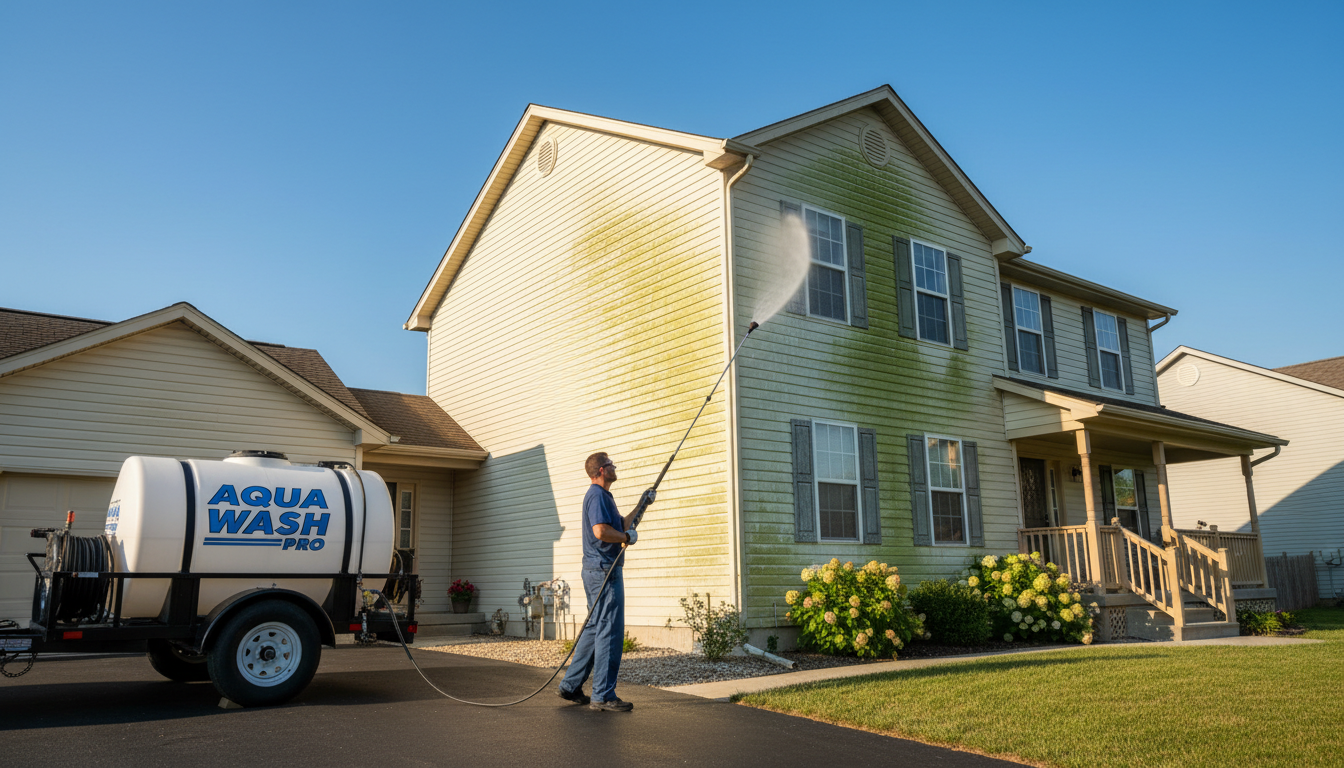
Understanding why high pressure damages older brick leads directly to the more useful question: what method actually works better for brick in the first place?
Pressure washing relies on mechanical force to dislodge dirt, biological growth, and staining. Soft washing takes a different approach entirely. It uses very low water pressure, typically under 500 PSI, combined with biodegradable cleaning solutions that break down mold, algae, and mildew at the root. The surface is treated, not blasted. The growth dies and releases, then gets rinsed away gently rather than being forced off with water volume.
For brick specifically, that distinction matters. Algae and mildew are not just sitting on the surface of brick; they colonize the pores, especially on older, more absorbent material. High pressure knocks off the visible layer but often leaves the root structure behind, which is why growth comes back faster after an overpowered cleaning. Soft washing addresses the biological source, which produces cleaner results that last longer without putting any stress on mortar joints.
So is it better to pressure wash or soft wash a house? For brick, the answer comes down to what you are working with:
Newer brick (post-1990) in good condition with intact mortar: Low-pressure washing in the 500-1200 PSI range is generally appropriate, provided the technique is correct.
Older brick, painted brick, or any brick with visible mortar wear: Soft washing is the recommended approach. The cleaning solution does the work; the water just rinses.
This is not a one-size-fits-all call, and it is one reason we go into more detail on our soft washing vs pressure washing post for homeowners who want to dig deeper into the method differences. At Country Boys, the choice between methods is always made after looking at the actual brick, not before we arrive.
How to Tell If Your Brick Is Safe to Pressure Wash
Knowing which method fits your brick starts with a hands-on look before any equipment gets involved. This pre-inspection takes maybe fifteen minutes and tells you more than any general guideline can.
1. Test the mortar joints with a screwdriver. Press the tip lightly into several joints around the house, especially on older walls and shaded north-facing sides. Healthy mortar resists the pressure. If it crumbles, flakes, or lets the screwdriver sink in easily, the joints are deteriorated. Any mechanical pressure at that point carries real risk of accelerating the damage.
2. Look for efflorescence. Those chalky white mineral deposits on the brick face are a sign that water is already moving through your wall assembly and carrying dissolved salts to the surface. More water under pressure will worsen that infiltration, not fix it.
3. Check for spalling. If brick faces are flaking, chipping, or showing a layered, peeling texture, the surface has already been compromised. Spalled brick cannot handle the same cleaning approach as intact brick.
4. Note the age of the home. If you know the house was built in the 1940s or 1950s, treat that as a soft wash situation by default. Original brick from Columbus neighborhoods built in that era is porous enough that pressure washing creates more problems than it solves. Soft washing addresses algae and mildew without forcing water into vulnerable material, which is the right answer to how to remove algae from brick without damaging mortar.
5. Check for painted surfaces. Painted brick changes the calculus entirely and gets its own treatment in an upcoming section, but flag it here because painted walls should never be approached the same way as exposed masonry.
The Right PSI for Pressure Washing Brick (and Why Most DIYers Get It Wrong)
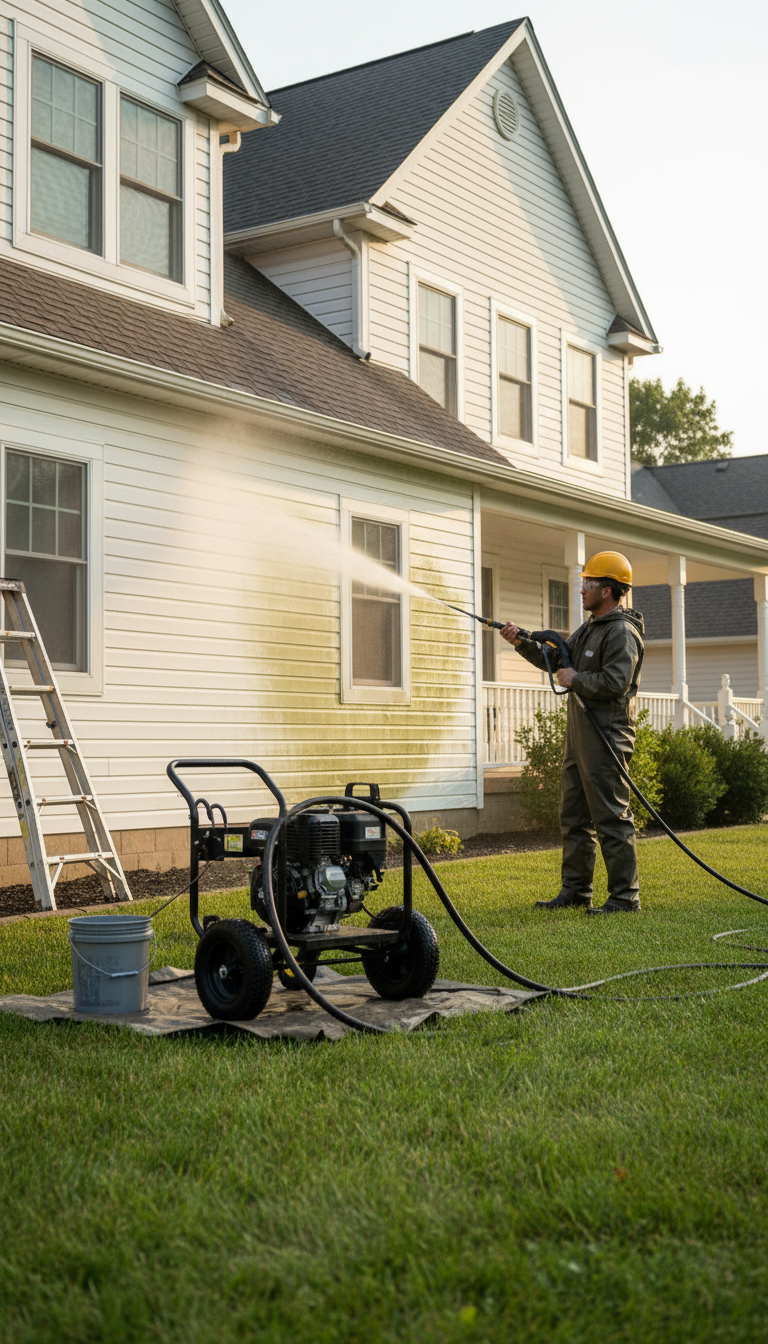
Once you have confirmed your brick and mortar are in reasonable shape, the next question is purely mechanical: what PSI is actually appropriate for brick, and why does that number matter so much?
For most residential brick, the safe working range is 500 to 1200 PSI. Brick in good condition on a newer home can handle the higher end of that range. Older or more porous brick should stay at the lower end. The hard ceiling is 1500 PSI. Above that, you are no longer cleaning; you are eroding.
Here is where most DIY attempts run into trouble. Consumer-grade pressure washers sold at hardware stores typically output 1600 to 3000 PSI, and many homeowners run them at full throttle because that is the default. That is often double the pressure brick can safely handle, applied at close range, which is exactly how mortar joints get blown out and brick faces start to spall.
Nozzle selection matters just as much as pressure setting. On brick, use a 25-degree or 40-degree tip only. A zero-degree tip concentrates the entire water stream into a pinpoint and will cut into mortar almost immediately. Keep the nozzle at least 12 to 18 inches from the surface and maintain a consistent sweeping motion rather than lingering on any single spot.
Professional equipment is built to dial pressure precisely within that safe window, something most consumer units cannot do even on their lowest setting. That gap between what the job requires and what a standard rental machine delivers is the practical reason pressure washing brick safely often calls for professional involvement rather than a weekend DIY attempt.
What About Painted or White Brick? Special Cases in Columbus Homes
PSI limits and nozzle angles get you far with standard exposed brick, but painted and white brick are a different category entirely, and they come up often enough in Columbus neighborhoods that they deserve a direct answer.
Painted brick should almost always be soft washed at very low pressure, well under 500 PSI. High pressure does not just clean painted brick; it strips it. The water gets under the paint film and causes bubbling, peeling, or outright removal in patches. Repainting a full brick exterior is not a minor expense, and it is an entirely avoidable one.
Limewash-treated brick is even more vulnerable. Limewash has become a popular finish in Columbus-area homes over the last several years, giving brick a soft, matte, old-world appearance. That finish is a thin mineral coating applied directly to the brick face, and pressure washing will remove it in strips. Soft washing with appropriate cleaning solutions is the only safe option for limewash.
White brick homes, whether painted, limewashed, or naturally light-colored, share the same vulnerability. The visual contrast makes any damage or streaking from an aggressive cleaning immediately obvious.
Chimney brick is another case that warrants caution. Chimney masonry is often older, more exposed to weather cycling, and harder to inspect closely from the ground. Pressure washing a brick chimney without a proper condition assessment is a risk not worth taking.
What Country Boys Does Differently When Cleaning Brick in Columbus

Every point covered so far, PSI limits, mortar vulnerability, the difference between soft washing and mechanical pressure, comes together in how a job actually gets executed on the ground. That execution is where things go right or wrong.
Before any equipment comes off the truck, we inspect the brick and mortar directly. We check joint condition, look for efflorescence or spalling, confirm the age and construction type, and flag anything that changes the method. That assessment dictates the approach; we are not committed to a single process before we have seen the surface.
From there, we select the appropriate method for what the brick actually needs. Newer homes in good shape get low-pressure washing dialed into the safe range for their material. Older brick, painted surfaces, and any wall showing mortar wear gets soft washed using biodegradable cleaning solutions that eliminate mold and algae at the source without putting mechanical stress on joints or faces. The final rinse is always angled downward, never forced upward into mortar.
The results of that approach speak for themselves on our before-and-after transformations page. We work with homeowners throughout Columbus, Phenix City, and the surrounding areas, and pressure washing brick safely is something we take seriously on every property, regardless of size.
How Long Does Brick Take to Dry After Cleaning and What to Expect
Once the cleaning is done, brick typically takes 24 to 48 hours to dry completely under reasonable conditions. In Columbus, reasonable conditions are not always what you get. Summer humidity here runs high, and that moisture in the air slows evaporation significantly, especially on walls that do not get direct afternoon sun. North-facing brick and areas under tree canopy or covered porches can hold moisture for three days or longer after cleaning.
Expect the brick to look slightly darker or uneven in color while it is still damp. That is normal. The pores in the brick are still releasing absorbed water, and the color will shift as it dries. Once the brick is fully dry, the true cleaned color comes through. If you are evaluating the results of a cleaning, wait for full drying before making any judgments.
If you are planning to apply a masonry sealant after cleaning, wait a minimum of 3 to 5 days before doing so, even if the surface feels dry to the touch. Sealing over brick that still holds internal moisture traps that water inside the wall, which can cause efflorescence, bubbling, or accelerated spalling over time. Patience here protects the investment you just made in getting the brick cleaned properly.
Maintaining your brick home preserves its beauty and structural integrity for years to come. While brick is strong, the delicate mortar and porous surfaces require a gentle touch to avoid permanent damage. If you want expert help ensuring your exterior surfaces stay in top condition without the risk of DIY mistakes, Country Boys is here to assist. Whether you need residential care or specialized Community Cleaning for larger areas, our team uses the right techniques for every surface. We take the guesswork out of maintenance so you can enjoy a spotless home.