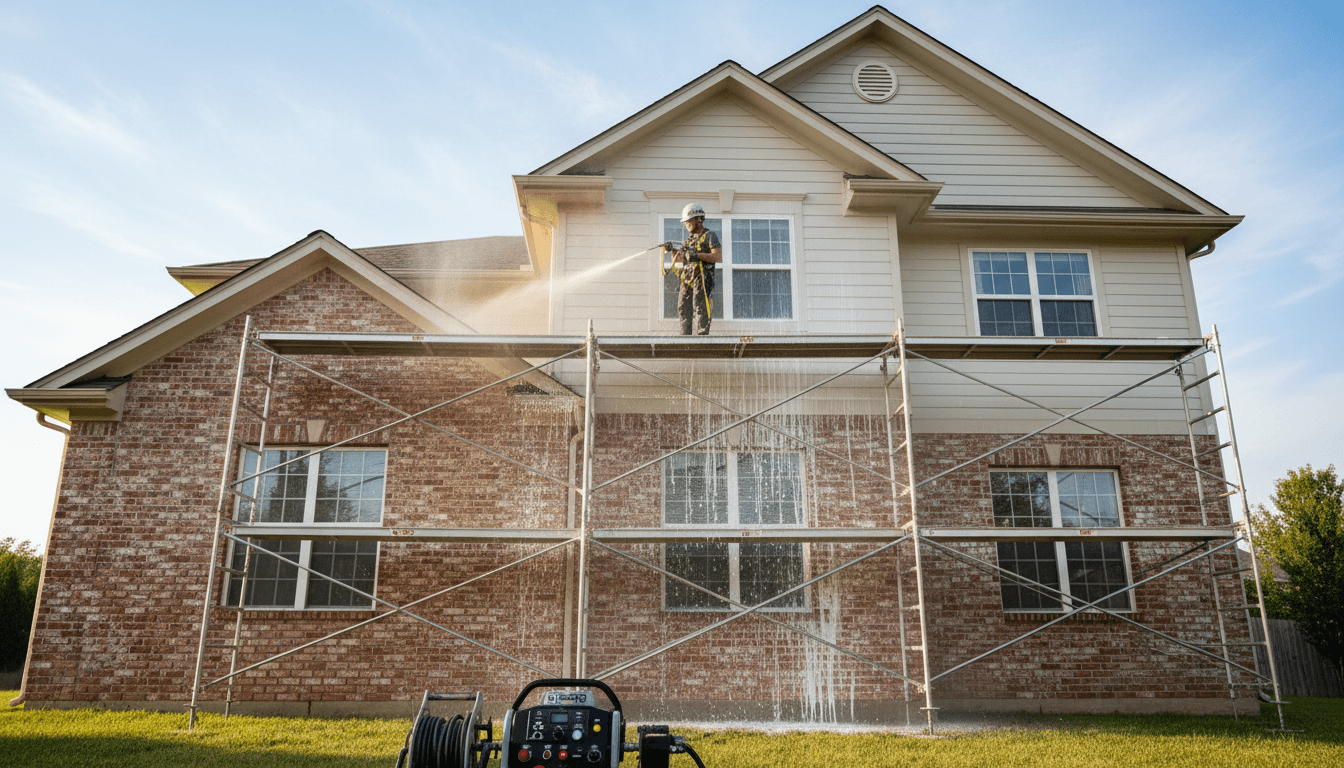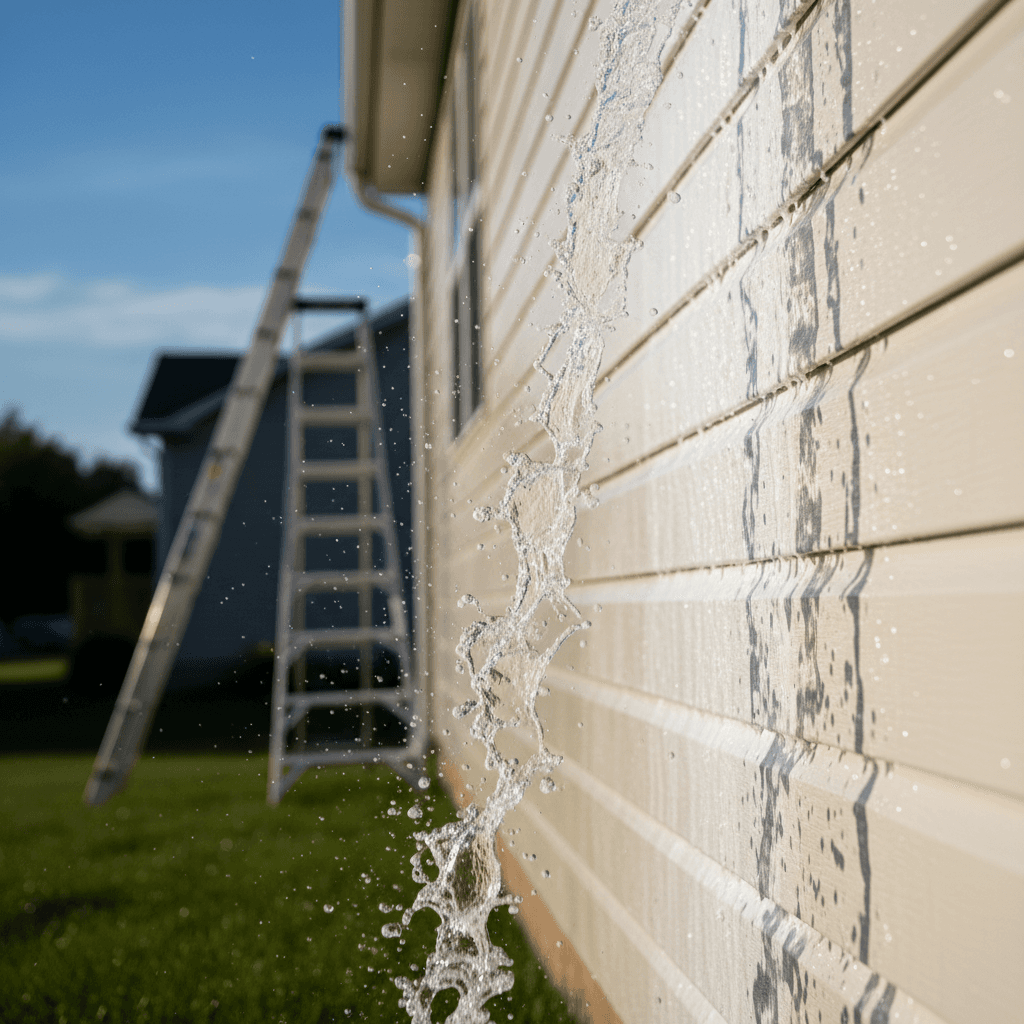
Soft washing is safer for home exteriors because it uses low-pressure water combined with specialized cleaning solutions to effectively remove organic growth without damaging delicate surfaces like shingles or siding. When comparing soft washing vs pressure washing, soft washing eliminates the risk of water intrusion and structural damage that often occurs with high-pressure cleaning methods.
You hired someone to clean your house exterior, and now you are staring at damaged siding, stripped paint, or worse, a leaking roof. High-pressure washing looks impressive in the moment, but the wrong technique on the wrong surface can cause hundreds or thousands of dollars in damage. This is one of the most common mistakes homeowners in Columbus make when hiring a pressure washing company, and it is completely avoidable. In this guide, you will learn exactly how soft washing and pressure washing differ, which method is right for each surface on your home, and why using high pressure on certain materials is a risk no homeowner should take.
The Quick Answer: What Is the Difference Between Soft Washing and Pressure Washing?
If you've been searching for exterior cleaning services in Columbus, GA, you've likely seen both terms used interchangeably. They are not the same thing, and using the wrong method on the wrong surface can cause real damage.
Here's the straightforward breakdown.
Soft washing operates at under 500 PSI, roughly the same pressure as a garden hose. The cleaning power comes from biodegradable solutions that penetrate and kill mold, mildew, algae, and bacteria at the source. The chemistry does the work, not the force.
Pressure washing operates between 1500 and 4000+ PSI. It removes dirt and debris through mechanical force. There are no cleaning agents doing the heavy lifting; it's raw water pressure stripping the surface.
Think of it this way: soft washing vs pressure washing is the difference between treating a problem and temporarily scrubbing it away. One method kills organic growth at the root. The other knocks it loose until it grows back. Knowing which approach your home's exterior actually needs is where professional judgment starts.
How Soft Washing Works: Low Pressure, High-Powered Cleaning Solutions
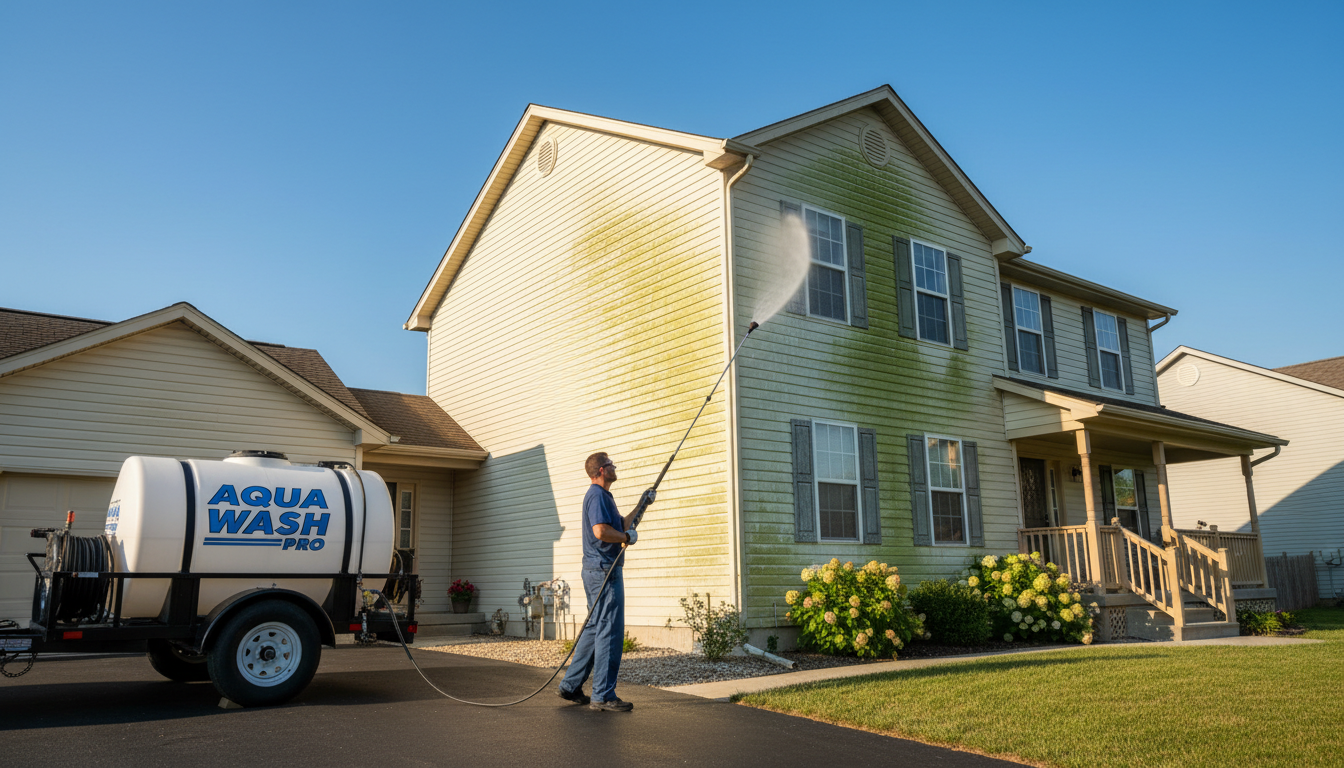
Understanding the soft washing process explains why it consistently outperforms high-pressure cleaning on home exteriors.
A professional soft wash mix typically contains three core components: sodium hypochlorite diluted to safe working concentrations, surfactants that help the solution cling to vertical surfaces and penetrate organic growth, and water. That mixture is applied through low-pressure equipment at roughly the same force as a standard garden hose, well under 500 PSI.
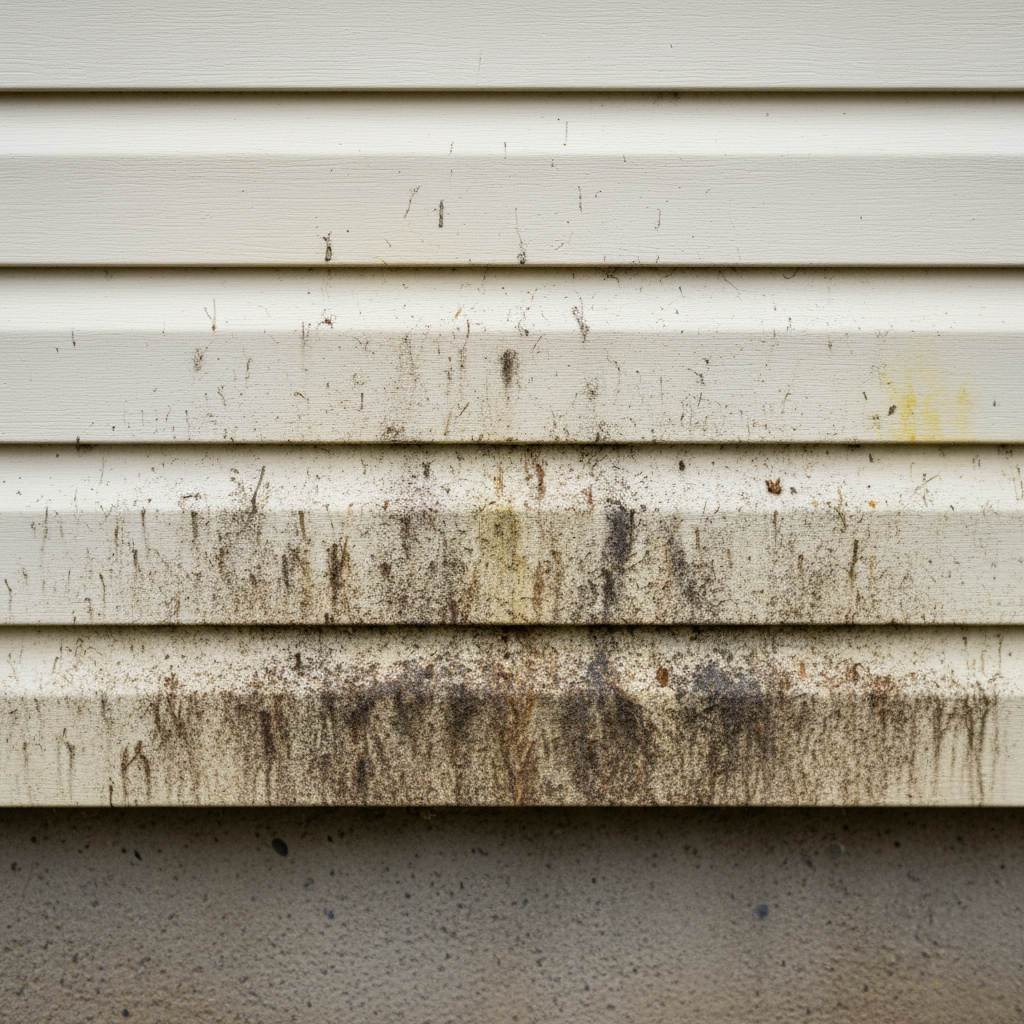
The key is dwell time. Once applied, the solution sits on the surface and works chemically rather than mechanically. Sodium hypochlorite penetrates the cell structure of algae, mold spores, and mildew, neutralizing them at the root. Surfactants keep the solution active on the surface long enough to do that work. By the time the surface is rinsed, the organism is not just dislodged; it is dead.
That distinction matters for longevity. Scrubbing visible growth away with high pressure leaves behind spores and root structures embedded in the material. They regrow. A properly applied soft wash eliminates the source, which means results hold significantly longer.
On a Country Boys job, the crew applies surface-appropriate dilutions based on what they are cleaning. The same formula used on a vinyl-sided house gets adjusted before it goes near painted wood, stucco, or roofing shingles. Professional-grade does not just mean strong; it means calibrated to protect the surface while still killing what needs to be killed.
The Risks of Using High Pressure on Your Home's Exterior Surfaces
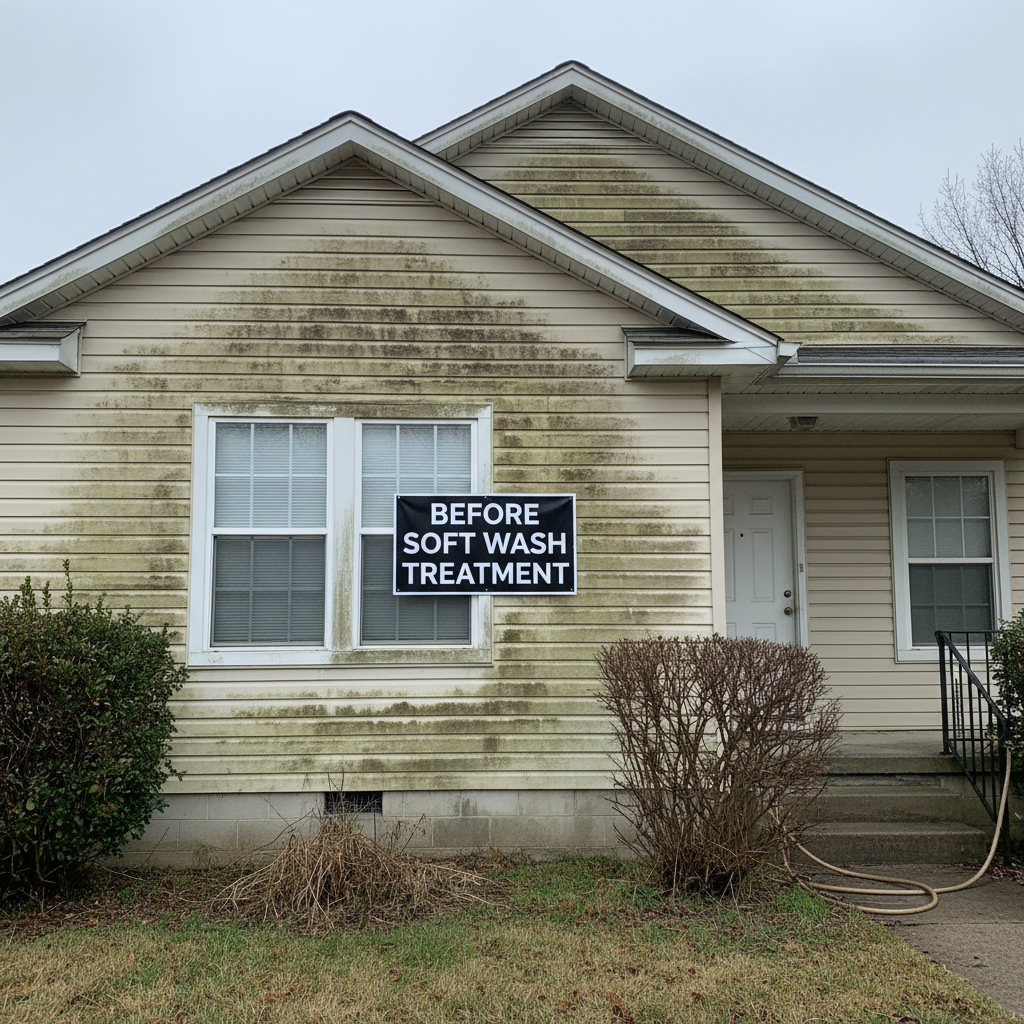
That chemistry-based approach matters even more when you understand what high-pressure water actually does to common home exterior materials. This is not about being cautious for caution's sake. These are specific, documented failure modes that show up on homes across Columbus, GA and Phenix City, AL.
Vinyl siding: High pressure forces water behind the panels. Once moisture gets into the wall cavity, it has nowhere to go. The result is mold and rot developing inside the wall, invisible until it becomes an expensive structural problem.
Asphalt shingle roofing: Pressure washing strips the protective granule coating from shingles. Those granules are not decorative; they block UV degradation and shed water. Once they are gone, shingle lifespan drops significantly. High pressure can also crack or lift shingles entirely, creating direct leak points.
Wood siding: The grain structure of wood absorbs high-pressure water unevenly. This raises and splinters the grain, leaves a pitted or etched surface, and opens the wood to faster moisture penetration and rot. Painted wood loses adhesion in the same process.
Painted surfaces: High pressure does not just clean paint; it peels it. Even where paint stays on, the force can create micro-fractures that allow water intrusion and cause premature peeling within months.
Stucco: Stucco is porous and bonded in layers. High pressure drives water through the finish coat and into the base layers, causing delamination, cracking, and bubbling that requires professional repair to fix properly.
Brick and mortar: The mortar joints between brick are the most vulnerable point. High-pressure water erodes mortar, and once those joints begin to fail, water infiltration and structural compromise follow.
The common thread across every surface is the same: high pressure creates damage that costs far more to repair than the cleaning ever saved.
Which Surfaces Should Always Be Soft Washed Instead of Pressure Washed?

Knowing which method belongs on which surface is what separates a professional exterior cleaning company from someone just pointing a wand at your house. The previous section covered what can go wrong with high pressure. This section is a practical reference for which surfaces demand soft washing by default.
Surfaces that should always be soft washed:
Asphalt shingle roofs: Granule loss from high pressure is permanent and accelerates shingle failure; soft washing cleans without disturbing the surface at all.
Wood siding: The grain structure splinters and opens under pressure, making soft washing the only method that cleans without creating new moisture entry points.
Painted surfaces: Pressure strips and micro-fractures paint; soft washing removes biological growth while leaving the finish intact.
Stucco: Its layered, porous composition absorbs forced water and delaminates; low-pressure application keeps the finish coat bonded.
EIFS or synthetic stucco: Even more water-sensitive than traditional stucco, EIFS has no tolerance for pressurized water intrusion.
Cedar shake: The wood is soft and textured; high pressure shreds the surface and destroys the natural weathering layer.
Aged vinyl: Older vinyl becomes brittle and cracks under pressure that newer panels might tolerate.
Screen enclosures: Frames bend and screen material tears; gentle application is the only safe option.
Surfaces where pressure washing is appropriate:
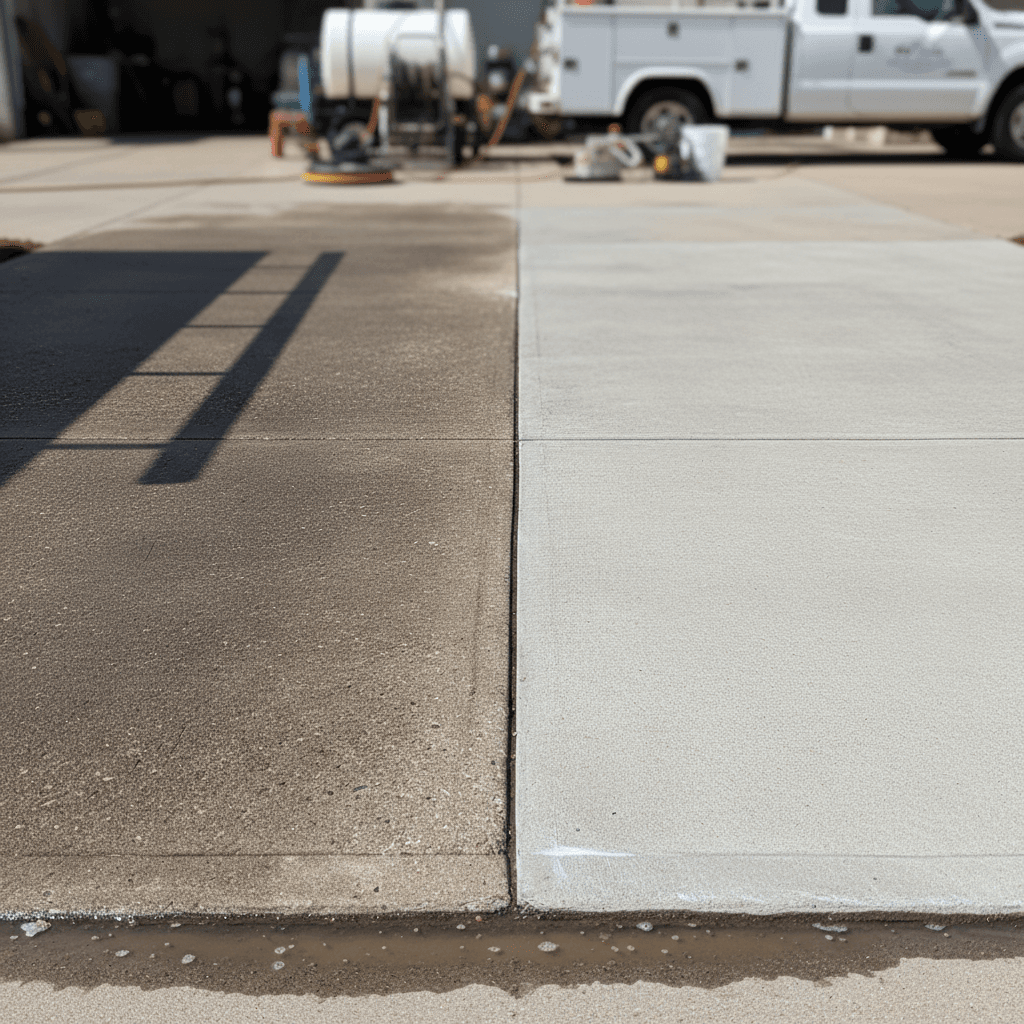
Concrete driveways
Brick pavers
Pool decks
These hard, dense surfaces can handle mechanical force because there is no granule coating to strip, no paint to lift, and no layered composition to compromise.
Many Columbus, GA homes combine vinyl siding with brick accents or brick foundations. That mix requires two different approaches on the same visit, which is exactly the kind of surface assessment that goes into every professional house soft washing job we do.
Does Soft Washing Actually Kill Mold and Algae, or Just Clean the Surface?
That surface-by-surface breakdown raises a fair follow-up question: does soft washing actually eliminate mold and algae, or does it just make them less visible? It is a reasonable thing to ask, and the answer matters for how long your results actually hold.
High-pressure water removes what you can see. It physically dislodges surface growth and rinses it away. What stays behind are the structures you cannot see: hyphae, the root-like filaments mold uses to anchor itself into a material, and holdfasts, the attachment structures algae use to grip porous surfaces like siding and shingles. Those embedded structures are alive and intact after a pressure wash. Given the right conditions, they regenerate visible growth within weeks.
Sodium hypochlorite-based soft washing solutions work differently. When applied at proper dwell time, the chemistry penetrates the cell membrane of the organism and disrupts it at the cellular level. The organism is not displaced; it is neutralized. There is no living structure left behind to regrow from.
The practical result is longevity. A professional soft wash typically holds 2 to 4 times longer than a pressure wash on the same surface.
That gap is especially significant in Columbus, GA and Phenix City, AL. The heat and humidity in the Southeast create near-constant conditions for algae, mold, and mildew to reestablish. Organic growth is not a one-time problem here; it is a recurring one. Soft washing addresses the biology of the problem rather than just the appearance, which makes it a smarter long-term investment for local homeowners dealing with a climate that never really gives exterior surfaces a break.
Soft Washing vs Pressure Washing: A Side-by-Side Comparison for Columbus Homeowners
The longevity difference covered in the last section is one dimension of a broader picture. Here is how soft washing vs pressure washing stacks up across every factor that matters to a homeowner making a cleaning decision.
| Soft Washing | Pressure Washing |
|---|---|---|
Pressure level | Under 500 PSI | 1,500 to 4,000+ PSI |
Cleaning mechanism | Chemistry kills organisms at the cellular level | Mechanical force strips surface material |
Safe surfaces | Siding, roofing, wood, stucco, painted surfaces, screen enclosures | Concrete, brick pavers, pool decks |
Results longevity | 2 to 4 times longer; organism is eliminated, not displaced | Short term; embedded spores and holdfasts regrow quickly |
Damage risk | Minimal when solutions are properly diluted | High on porous, coated, or layered surfaces |
Best use cases | House exteriors, roofs, fences, gutters | Driveways, hardscape, bare concrete |
Put plainly: for most exterior surfaces on Columbus and Phenix City homes, soft washing is the safer, more effective, and longer-lasting choice. Pressure washing is the right tool for concrete driveways, brick pavers, and pool decks. It should never be the default for siding, roofing, wood, or any painted surface. Using high pressure in those situations trades a short-term clean look for long-term damage that costs real money to repair.
Why Country Boys Pressure Washing Uses Soft Washing for House and Roof Cleaning

That comparison makes the technical case. Here is how it plays out in practice for homeowners in Columbus and Phenix City.
Country Boys Pressure Washing is a locally owned operation, not a national franchise running crews through neighborhoods on a volume schedule. When we show up to a property, the first thing that happens is a surface assessment. Vinyl siding, wood trim, brick, roofing shingles, painted fascia, each one gets evaluated before any equipment is set up. That step determines which method and which solution dilution belongs on each part of the house. It is not a formality; it is the difference between cleaning a home and damaging one.
We use professional soft washing equipment and surface-safe solutions because the math is simple. Damage caused by the wrong method costs homeowners far more than the cleaning job was ever worth. Stripped shingles, water-intruded wall cavities, peeled paint, these are real outcomes that follow corners being cut.
Our roof soft washing service follows the same standard. Low pressure, calibrated chemistry, and the patience to let the solution do its work correctly.
Locally owned means locally accountable. We stand behind the results because we live and work in the same communities our customers do.